The secret

As we are all growing older, this topic is truly a democratic one 😉!

Recently in public life we seem to be in an era of youth worship, everything young is good, forward looking and bold! Many times, it is just idiotic but … that is not my point.

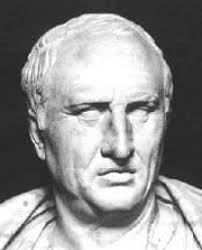
I was reading an essay by Cicero “On Old Age” (breaking news: published 2000 years ago!) where he talks about how life changes as you age and you should do different things threaded by your unique mix of talents and wishes. It is amazing how modern it is and how timeless wisdom it holds. It does not idolize elders or youngsters but it sure asks everyone to be smart and evolve as life does.

That goes along with our incessant search for immortality or at least a longer and healthier life. In recent decades we have been inundated with books about the blue zones (areas of the world where life expectancy is significantly higher) trying to extract the secrets to a longer life expectancy. But what good is it a long life if it is aimless?  Seneca said “If one does not know to which port one is sailing, no wind is favorable”. That brings me to the Japanese concept of Ikigai “the reason for being”. Ikigai includes the sense of purpose and joy together, and alignment between your purpose and what makes you happy, being all one. It is interesting that in those blue zones that I mentioned earlier researches find healthy habits such as regular moderate exercise, healthy food but they find happiness through a sense of community, belonging and a purpose in life. They all have a reason to get up in the morning.

At the turn of the century Dr Snowdon published what is now known as the “Nun Study”. This is a study done with the diaries found in an old catholic monastery. These were nuns who wrote a short biography about themselves and what they expected from the commitment they were about to make. These diaries were dated in the first half of the XX century and one of the precious elements is that all of them had the same occupation and lived a similar lifestyle, almost a “controlled trial”. The study showed that positive emotions in early life were associated with longevity. Those nuns who had a more positive emotional content looking at their future lived longer and healthier. So, it is true how you handle things has a direct impact on your life. Your body tells you, what is the point of being here if we (you and I) are not happy? let us close shop early.

The common theme underlying Cicero, Ikigai and the Nuns is that the strongest drive to life lies inside, as much as we look for external reassurance, recognition, external signs of power … we only give it to ourselves, nothing outside our own heart-brain-soul has any impact. Our first step to longevity is the decision to be happy, regardless of what happens to us. Epictetus ( who was born a slave in times of the Roman Empire) said: “It is not happens to you, but how you react to it that matters”

Eating vegetables and sashimi helps… but we need to find our why… why do we get up in the morning? why do we smile? why do we go to work? why, why, why, why…find your why!

References

On old age by Cicero 44 BC

The Blue Zones, Second Edition: 9 Lessons for Living Longer from the People Who’ve Lived the Longest by Dan Buettner, 2012

Deborah D. Danner, David A. Snowdon, and Wallace V. Friesen. Positive Emotions in Early Life and Longevity: Findings from the Nun Study University of Kentucky Journal of Personality and Social Psychology, 2001, Vol. 80, No. 5, 804-813

Hoy he leído en el periódico…

que María Dolores Pradera ha muerto. Como dicen en todos los obituarios era una dama de la canción y mucho más.

Os voy a contar mi María Dolores Pradera. Desde que salí de casa siempre he llevado un CD, o en mi iPod o iPhone, canciones de María Dolores, aunque nunca ha sido “cool” en mi generación. Hay una serie de canciones que no tienen parangón cuando ella las canta. “La flor de la canela”, “el rosario de tu madre”, “fallaste corazón” y “fina estampa” son de una belleza imperturbable.

Recuerdo que mi padre siempre llevaba en el coche casetes de María Dolores Pradera y Vicente Fernández. Cuando lo acompañaba en su ronda por los pueblos como médico rural escuchaba a María Dolores mientras el Peugeot 404 subía las cuestas de los pueblos de Yerri, Guesalaz o Lezáun  (el pueblo de mi hermana mayor). Eran tiempos en los que no había “practicante” (nombre local para un enfermero/a) y el médico tenía que administrar las inyecciones y hacer curas a las heridas. Era un tiempo en el que se llamaba al teléfono de la “casa del médico”, se dejaba el recado de que alguien estaba enfermo y había que ir a visitarlo. Mi hermana y yo sufríamos ansiedad de anticipacion por si no habíamos recogido la informacion necesaria que dar a mi padre sobre el enfermo (nombre, pueblo y situación clínica). Esos recorridos eran diarios, y más o menos extensos. En primavera era una delicia ir por las llanuras entre Arizala y Riezu, con Ugar a la derecha y Villanueva en la colina de la izquierda, más  adelante Arizaleta. Con cierta frecuencia solían sembrar alfalfa, por aquello de rotar cultivos y porque la alfalfa pone nitrógeno en el suelo, según la costumbre local. En este tiempo de finales de mayo, el campo olía a hierba fresca recién segada. Las lluvias ligeras de la primavera tardía dejaban un olor limpio en el ambiente. En esa época es cuando empezaba a amarillear el trigo. Mientras mi padre hacía la visita, yo me quedaba en el coche, escuchando a María Dolores…

Fina estampa caballero,

Caballero de fina estampa

Un lucero que sonriera bajo un sombrero

No sonriera más hermoso

Ni más luciera caballero

En tu andar andar reluce la acera al andar andar

Al acabar la visita, con frecuencia le obsequiaban con un manojo de puerros o un saco de patatas o una ristra de cebollas. Siempre algo de temporada, recién cogido y lo mejor. En las “casas grandes” de estos pueblos a veces regalaban un ramo de flores, signo de posición social, pues pocos tenían sitio o recursos para cultivar flores. A veces le daban un pollo o un conejo vivo, a mi madre no le hacía gracia porque ella tenía que disponer de los animales y el espíritu del deceso siempre turbaba la casa un rato.

Después de este tiempo de alfalfa segada era la hora de las cerezas. Cerca de casa en el camino a Anderaz había una huerta con cerezos y albaricoqueros que a final de junio, cuando acababa el colegio, tenían la fruta colgada…  fresca y sin precio. ¡Era un momento luminoso, donde el tiempo se antojaba infinito hasta el siguiente curso, los días se llenaban de luz, piscina y nada!

En ese tiempo mi abuelo materno solía llegar un día al alba, antes de las sies de la mañana, a recogerme. Era hora de ir a Urbasa a ver las yeguas. Era un día de caminatas sin fin, paradas para asar costillas y beber de la bota de vino. Un día para caminar con los palos de avellano en la mano, rectos como una regla. Pero esos días los contare en otra ocasión, hoy… déjame que te cuente, limeño …

Gracias María Dolores!