From college to Restoration Hardware, a change in paradigm

Every generation has a landmark book that describes their way of life and the impact technological changes, political or economic crisis has in their behaviors and beliefs.

In the 70s Daniel bell wrote “The Coming of Post-Industrial Society: A Venture in Social Forecasting “. He described a new kind of society, the post-industrial society. He argued that post-industrialism would produce a society where the most valuable asset would be information and services (the ”know how”). Bell also argued that the post-industrial society would replace the industrial society as the dominant system. There are three components to a post-industrial society, according to Bell:

  • A shift from manufacturing to services,
  • The centrality of the new science-based industries
  • The rise of new technical elites and the advent of a new principle of stratification

In the 80s Anthony Giddens, a prominent thinker in the field of sociology, developed his theory of structuration. He addresses whether structure or agency is the primary driver of human behavior. He thinks neither is more important than the other and a combination of both is what drives human behavior today. In the ‘90s he got into politics with “a Third Way” that reconciles the policies of the political left and the political right in order to form a system of ethical socialism–a balance of capitalism and socialism. Not a happy ending!

Bobos in paradise by D Brooks probably is the extension of Bell’s work, in a “Vanity Fair” shoot. He does not do a deep sociological analysis of the new class but accurately describes its behavior. Brooks coins the term “Bobo” (bohemian bourgeois) and describes their life in Paradise.  This Paradise has gourmet coffee shops, vintage anything stores, exotic restaurants and clothing stores which sold ties and ripped pants in the same space. The new bourgeois loves quality, can afford the price but deep inside feels guilty and needs to dress up its wealth.

And in my humble opinion Restoration Hardware is the epitome of such behavior. This is a store where furniture seems to be old, really old and is expensive… really expensive. The last letter from the CEO is a perfect example of that contradiction between security and transgression. Take a look:” We, like Vitruvius, believe the most pleasing environments are a reflection of human design. They are a study of balance, symmetry and perfect proportions. We respect the hierarchy and important relationships between architecture, furniture and décor that create harmony. It’s a discipline of addition through subtraction, where less becomes more, and calm is created through continuity. The result is a design where the whole becomes more valuable than the parts.”

Vitruvius was an architect of the roman era, so he represents an iconic unknown figure of and idealized world (Patrician romans lived long lives, but their servants and slaves …. lived in hell and child mortality was very high!). In the next statement a platitude, all designs are human. Ok, let me get this straight: Some designs are more comfortable than others but all of them are human, that is all that there is, no UFO came to earth and left some furniture for us (a non-human design). Then the idea of balance and harmony, Bobos will never make a revolution. The next platitude is an intrinsic contradiction, very applauded these days “less is more” and the last one is epic” the whole becomes more valuable than the parts” we dissolve individuality…. Though this is the hallmark of our days … the agency as described by Giddens is the primary driver nowadays (me, myself and I).

As described by D Brooks the old establishment in the late fifties and sixties no longer believed in the system (the WASP code) and opened the gates. Then Bobos arrived through those gates, and they want to stay, feel guilty about it but do not want to make or suffer any revolution.

There is another line of thought, RH provides something that Bobos need, a return to nature, that furniture with its ascent of old respectability has also a connection with our roots, with nature. Bobos want to live in sync with nature, and wood from sustainable forests makes the cut in the living room.


References

Introduction to sociology by A Giddens, 1982

The third way by A Giddens, 1998

Bobos in Paradise by D Brooks 2000

Restoration Hardware, Letters from the CEO 2018 Spring

The Coming of Post-Industrial Society: A Venture in Social Forecasting by D Bell, 1973

Eight books in the library

Every generation has its highs and lows but the account of the moral decay of its lows is an intriguing and far richer learning experience. Let me review different writers and philosophers over the last 254 years that represent the best of the liberal thought. The continuity of ideas on freedom through different times is breath taking and a testament to individual freedom as the basic building block of a healthy and prosperous society. I will then review a number of stories in the XXth century that represent the negation of such liberal ideas and yet the indelible presence of human freedom. We must be vigilant and work on our freedom every day, not take it for granted because freedom is at risk when each and every one of us does not work for it. The core to the permanence of a free society sits in the moral behavior of each one of us, individuals. When the moral ethos of individuals decays societies embark on a downward spiral.

In the XVIIIth century Rousseau is probably the most advanced thinker in political philosophy. In his essay The Social Contract (1762), he proposes a social contract where its members will be free because they all give up the same rights and impose the same duties. He further divides the political system into two elements, the first one being a sovereign consisting of the whole population that represents the general will and is the legislative power within the state; the second element is government, different from the sovereign. The Social Contract argues against the idea that monarchs are empowered to legislate. Only the people, who are sovereign, have that right. In summary, he establishes that legitimacy comes from the people and there must be a division between legislative power and government. Pretty advanced in 1762!

In the XIXth century the luminary of liberalism and free societies was Stuart Mill, the English economist whose opus magnum On liberty (1859) defined the need for freedom in society and affirmed the individuality over societal coercion. He opposes the concepts of authority and liberty. In his view it is citizen’s liberty which needs to control the tyranny of government. He also describes two mechanisms:  rights belonging to citizens, and a body of some sort which represents the interests of people, both a condition to the governing power.

In the XXth century, the embodiment of freedom is probably best represented by another Englishman Winston Churchill. In 1940 he personified the inalienable right to freedom and individuality against oppression and barbarism. From a philosophical point of view there were many whose leadership could be singled out but I would vote for “Four Essays on Liberty” by Isaiah Berlin. He updates the concept of liberty, in need of reinforcement and redefinition after WWII while the Soviet Union, China and so many others were curtailing such freedom in most of the world.

So, there is a rich and long history of advocates for freedom and open societies over the last 200 years. If the Hegelian approach to history as an evolution to a state of perfect freedom were true we would have probably achieved such state of rational political happiness by now.

What happened? Well, the twentieth century happened!

Now that we have gone briefly through the political philosophy that has been a constant in recent times, which is the surface of history though the only one chronicled by the history books, let us go to what a Spanish writer (Miguel Unamuno) called “intrahistoria”, the everyday life and suffering of the those with no lines in those books, the teachings of those individual stories and how they become truth and sometimes history.

“Man’s search for meaning” by Viktor Frankl (1942). When I first read the book back in late 80’s, a present from a very good friend who probably knew me better than I knew myself, I was very impressed. I was shocked as to the possibility of even considering the existence of moral action in such dire inhuman conditions. Frankl concludes that there are only two kinds of human beings, decent and indecent. He extends the category to Nazi guards.  I have to agree that there are two ways to answer life, with or without decency. But that category that he applies equally to Nazi guards and prisoners deserves further consideration in my opinion. A political system, like Nazi Germany, cannot be built but with the acquiescence of the society over which it rules. Without denying the fundamental freedom of choice of every individual, Nazi guards included, a “decent” Nazi guard has chosen silence or agreement first and then has become a “decent” human being otherwise. It is good to also read “Not I” by Joachim Fest a story of courage, hardship and loneliness from the other side of Frankl’s fence, though nothing is comparable to Frankl’s suffering.

“1984” by George Orwell (1949) is the story of human breakdown and moral decay to abysm. What the totalitarian government does is terrible but within the boundaries of any regime that does not believe in freedom (today’s Venezuela, or Facebook censoring whatever does not apply to its unwritten millennial rules of acne damaged brains without access to tretinoin). What makes the case is the betrayal, through torture and exhaustion. That betrayal does not kill Winston or Julia, but it is the final blow to their freedom and to their last remnant of human dignity. After that moment they become numb to any human feeling or value, they change into something non-human. And they do not like themselves or each other.

“Life and Fate” (1960) by V Grossman. This book is monumental, out of the many ideas that run through it I think 2 are timeless lessons. The first story is that of physicist Viktor Shtrum, who goes from rags to riches, but in the end is corrupted by the totalitarian state and his own moral weakness. The other is completely different, and though Grossman is not a warm writer the meaning of life surfaces in the book as individual and random acts of kindness.  There are few moments through the monumental story where small actions make the world a better place.

“Patria” (2016) by F Aramburu. This is a book for our and future generations, it describes the mindless, racist and terrifying world of murderous terrorism in the northern region of Spain known as the Basque region. But the most important aspect of this magnificent book is the description of each and every personal story, all of them small in societal terms but gigantic in personal terms. Each individual story speaks to the successes and failures of our own personal decisions, sometimes in situations we have created ourselves and others in situations that destiny awarded us, thank you very much!

What do all those books have in common?

The books of liberal thinkers describe the most natural tendencies of individual the self to freedom and the exercise of choice without coercion while providing a framework to have such freedoms in a societal agreement. They propose a societal contract that will allow us to keep as much personal freedom as possible while we all can pursue our own dreams.

The following books describe the harrowing circumstances that have occurred in the XXth century and to a certain extent underscore the difficulty of such societal agreement for an open society. At the same time, they describe the irrefutable nature of humankind, freedom based on personal decision and moral beliefs. That happens in a concentration camp, in the gulag, in a totalitarian regime or in San Sebastian. All similar circumstances where terror reigns and only personal freedom allows the human being to raise above the circumstances.

So, here is the paradox… why is it so difficult for an open society to thrive when freedom is one of the most basic instincts of human beings (along with breathing on a regular basis).

I think we need to go back to Hegel. Even though he did not get everything right, he identified the link between both personal freedom and political framework. In his Phenomenology of Spirit (1807) Hegel identifies the relationship between “objective” history and the individual consciousness (“spirit”) of the being as an intimate one. In that intimate relationship we can understand the societal twists in history as the sum of the individual consciousness. And considering that there is no straight path to the improvement of the consciousness, history (which is the sum of individual political acts) is an uncertain and sometimes erratic process, with no specific end state or destination.

So here you go, in the end history is the sum of each individual human act, we cannot hide and say ” it has nothing to do with me” because it DOES!

Literature References

“The Social Contract” by Rousseau

“On liberty” by J Stuart Mill , surprisingly modern 

“Four Essays on Liberty” by Isaiah Berlin

“1984” by George Orwell, just read it

“Life and Fate” by Vasily Grossman, just read it

“Man’s search for meaning” by Viktor Frankl, just read it

“El Quijote” by Miguel de Cervantes, always a good read

“Phenomenology of the spirit” by George Hegel, take your time

“Patria” by Fernando Aramburu, a monumental book, read it first!

Papá, te dejé una nota…

Cuando la leas, me contestas por favor. Estuvimos en casa, pero no pudimos hablar. Últimamente andas algo meditabundo, en tus pensamientos. Sordo para el ruido ajeno, pero bien de oído.

Te quería decir que Alejandro se parece algo a tí. Tiene esa cara algo redonda que tenías de joven, no tiene nada de paciencia… y cuando lee un libro está inmerso en él, abstraído como tú, en medio de la historia. Por cierto, tu orla estaba en el cuarto de estar y te reconoció sin que nadie le dijera nada.

No hay muchas novedades, a nosotros nos va bien a todos. No es que vaya viento en popa o sean días de vino y rosas, pero tenemos el optimismo necesario para seguir adelante y reír de vez en cuando. Nos juntamos todos, estuvimos jugando en la piscina, revolviendo en la despensa y bebiendo los vinos que tenéis abajo. Diego se ha convertido en un “master chef “de hacer chuletas en la parrilla. Al final de la noche tiramos unos cohetes… y despertamos a medio barrio. Si te dicen algo, hazte el distraído.

He descubierto a J. Pla. Creo que había un libro suyo en la colección aquella de la editorial Salvat, la “Biblioteca Básica “. Deberías leer “El cuaderno gris”, te va a gustar seguro. Es una mezcla de la sencillez de pueblo con esa sapiencia vieja y algo descreída de los que llevan 80 abuelas en el mismo sitio.  Hablando de la Biblioteca Básica, recuerdo que esa colección de libros a mí me parecía como la quintaesencia de la literatura universal. Yo no conocía a la mitad de los autores, pero el hecho de que fueran de todos los países me daba una impresión de amplitud inmensa. Leí algunos de esos libros, pero no tantos como debería. Ahí descubrí a Baroja (La busca), Edgar Allan Poe, Óscar Wilde (El Retrato de Dorian Gray), Ramón J. Sender (El Bandido Adolescente) y más tarde George Orwell (1984). Bueno que me voy por los cerros de Úbeda rápido.

Por lo demás ahí fuera las cosas siguen más o menos igual, las periferias siguen” dando por saco” como sueles decir, seguimos sin leer, pero eso sí vamos a futbol con fe irredenta. Casi se me olvida, una mala noticia… se ha muerto María Dolores. Hace poco contaba a mis amigos como solías poner sus canciones cuando hacías la ronda por los pueblos y nos llevabas de grumetes en el coche. Estos días de principio de verano el campo en Yerri estaba precioso, con ese amarillo nuevo de julio cuando la cosecha está en plena vorágine. Estos son los días en los que se trabaja de lunes a domingo… y se mira al cielo para que esas pocas gotas no estropeen el grano. María Dolores estaba cantando “Fina estampa”.

Cuando vuelva seguimos hablando. Mientras tanto, un beso para tí y otro para la mamá


Gorrín

Gorrín es el nombre local para el cerdo menor de cuatro meses. En el resto de España se le suele llamar cochinillo o lechón, porque se ha alimentado solo de leche.

La costumbre de mi abuelo materno era festejar cumpleaños y otras celebraciones (como pentecostés, o las fiestas patronales) con gorrín. Y para nosotros era uno de esos días grandes que ocurren de ciento a viento, y del que disfrutábamos cada minuto.

Eran domingos de primavera tardía o pleno verano. El día comenzaba con un desayuno rápido, pues había que prepararse (ropa de domingo) para llegar a misa en el pueblo de mis abuelos maternos. Al llegar íbamos al primer banco de la iglesia en el lado izquierdo. Este era el banco de mi abuelo, y por delegación nuestro puesto en misa. Era una de esas leyes no escritas, pero ineludiblemente respetadas. La iglesia era pequeña, fría y el coro era parco en cantantes, pero en esos días la luz entraba furiosa por los ventanales elevados. Era una luz que descubría el retablo, algo tosco y con unos cuantos cuadros que jamás llamaron nuestra atención. La iglesia estaba dedicada a San Andrés, lo cual nos interesaba bien poco. Al acabar el oficio nos encontrábamos con tíos y primos. Después de misa las preparaciones comenzaban. Mi abuela, mi madre y mis tías comenzaban a preparar bandejas de croquetas, los espárragos, el jamón, el chorizo y la lechuga.

La verdadera aventura era que el abuelo Martin te llevara a recoger el gorrín a Riezu. Riezu era el pueblo situado al pie del nacedero del rio Ubagua y adquiría un aspecto mítico por varias razones. Este pueblo tenía varias casas de aspecto palaciego, había una piscifactoría, ¡un nacedero y … asaban el gorrín!

La carretera cruza el pueblo de sur a norte, buscando la ladera que lleva a Iturgoyen (el siguiente pueblo). El nacedero estaba a unos 20 minutos de paseo del pueblo. Se seguía un camino serpenteante que dejaba el riachuelo a la izquierda hasta llegar a una oquedad de la que salía agua con una espontaneidad natural, sin aspavientos. El agua lleva aflorando a la superficie allí toda la vida, sin descanso, sin demora y sin artificio, el lugar transmite un aire de permanencia sencilla y predecible.

Los domingos de gorrín lo interesante estaba en el horno donde este era asado. El abuelo Martín, Martín Vidaurre de Arizaleta era su tarjeta de presentación, cogía la furgoneta (un Renault 4 blanco de los que tenían el freno de mano por palanca en el lado izquierdo del volante) y corríamos veloces por la carretera abajo de Arizaleta a Riezu. El lugar donde se asaba el gorrín era la pequeña fábrica “Pastas Manchingo” y mi abuelo siempre añadía 2 bolsas de rosquillas que estaban muy ricas. Al llegar accedíamos al obrador donde estaba el horno. La ceremonia comenzaba con el saludo al panadero y seguía con la apertura de la pequeña ventana del horno a través de la cual se veían todos los gorrines en círculo en proceso de ser asados. Si el nuestro estaba a punto, se sacaba del horno en la bandeja metálica rectangular en la que se había asado con sus jugos. Como las asas de la bandeja quemaban, se liaban unas asas de papel con tiras de los sacos de pienso Sanders. Llevábamos la bandeja hasta la parte trasera de la furgoneta, y con el gorrín y las pastas… enfilábamos la carretera para llegar en un pispás a casa. ¡Para cuando llegaba el Gorrín, la lechuga y los entremeses tenían que estar comidos porque si no las cortezas se pasaban!

El abuelo solía poner la bandeja en medio de la mesa, que en aquella época se antojaba inmensa y atareada. Se empezaba el reparto de las cortezas primero y la carne después. Seguían unas horas de conversación, discusión acalorada y risas que acababan en postre, café, Soberano y Faria para ellos. Recuerdo que mas tarde mi tía Puy comenzó a fumar puros, lo cual era una transgresión aceptada pues vivir en Madrid da cierto aire cosmopolita y posmoderno en el pueblo.

Mi hermana pequeña sigue buscando ese gorrín del abuelo…

Cultural relativism and pluralism… opposing views

First and foremost, this post pays tribute the teenage son of a great friend. He produced an essay for school I had the privilege to read, and it gave me the logic to link all the following concepts together. Those ideas had been dancing in my mind for a while, his essay threaded it all. Thank you!

This will be a series of 3 essays. This one on cultural relativism, the next one on global governments and the last one on pluralism and patriotism.

Executive summary: Cultural relativism carries underneath its appealing tolerance an intrinsic denial of moral freedom and responsibility of the individual

Wow … you just outscored yourself. I do not understand a word of what you are saying!

Let us start.

When the Spanish “conquistadores” arrived in America they wanted to do business and trade spices, gold and anything of value to their economy but they also wanted to expand Christianity. The validity of the second statement has produced many PhDs and endless discussions. However, there was an underlying and unquestionable assumption in their minds; these societies were inferior to the western civilization. Anthropology coined the concept of cultural ethnocentrism, defined as a judgement on other cultures solely by the values of one’s own. That judgement extends to behaviors, language, religion and customs.

Though there are positive aspects to ethnocentrism such as a sense of belonging, and keeping traditions alive, in this age of open communications and frequent movement of goods and people there are significant disadvantages to that line of thought. Ethnocentrism drives us to make false assumptions regarding cultural differences when we use what is normal in our culture to make generalization about the customs and culture of other people. It can also drive a sense of self-righteousness. Our way is the right and only way.

From that mind set, our culture moved to accepting the differences. It was not overnight, and in my opinion the initial steps were taken in the Peace of Westphalia (1648). That treaty, which ended a 30-year war, made 3 important points: first recognized sovereignty of states, second awarded equality standing to states and third instituted the non-intervention of one state in another state’s affairs. Even though it was a political treaty it allowed different ways to organize society to co-exist in a relatively peaceful state within the western civilization. However, colonialism continued for few hundred years, even as lately as the end of the twentieth century. By then cultural relativism had gained traction in western societies who became more tolerant for different cultures, and even at some point fascinated by them (in New York if you say “Oh là là” in a restaurant they immediately bring you a “coq au vin”).

Cultural relativism states that beliefs, values, and practices of a culture should be evaluated from the viewpoint of that culture itself. In that respect, all cultures are equally valid. Cultural relativism avoids cultural bias and judgement of one culture from one ‘s own. The seminal idea was developed by Franz Boas early in the twentieth century. He rejected the distinction between societies with and without a written history. He understood all societies to be proper objects of the anthropological study.

Those ideas, that initially originated in anthropological research permeated to sociology and mainstream media and society. One pivotal moment that brought visibility to the fact that cultural relativism had already sunk deep into the educated classes of the western world was the Universal Declaration of Human Rights, adopted by the UN General Assembly on 10 December 1948.

The American Anthropological Association declared its opposition to such resolution based on the fact that “man is free only when he lives as his society defines freedom, that his rights are those he recognizes as a member of his society” because of that “an effective world-order cannot be devised except insofar as it permits the free play of personality of the members of its constituent social units, and draws strength from the enrichment to be derived from the interplay of varying personalities”. For the American Anthropological Association” Only when a statement of the right of men to live in terms of their own traditions is incorporated into the proposed Declaration, then, can the next step of defining the rights and duties of human groups as regards each other be set upon the firm foundation of the present-day scientific knowledge of Man.”

That was something!

Only in the group man is free, only when following the rules that define freedom in his society. Following that logic, we cannot have a universal declaration of human rights. Let us start with the first human right:” All human beings are born free and equal in dignity and rights. They are endowed with reason and conscience and should act towards one another in a spirit of brotherhood.”

According to the American Anthropological Association it depends… on your culture. If your cultural environment does not endow all human beings with equal dignity … then you are not entitled to it.

What happened?

Well, cultural relativism. As described above beliefs, values, and practices of a culture should be evaluated from the viewpoint of that culture itself and all cultures are equally valid. At the core of such “all cultures are equally valid” lies a moral relativism.

As described by Sartori, multiculturalism and cultural relativism are antithetical to the tradition of pluralism. The truly liberal democratic pluralism means an open society grounded in tolerance and consensus. In that societal agreement, religion, politics, and economics, are separated. There is a multiplicity of voices but there is also an agreement to disagree, and a process clearly described to resolve such differences through the rule of law. The law is a by product of the societal agreement… and that societal agreement is another by product of the moral values of such society. That brings us to the next argument.

Societal agreements are based on moral values. Those moral values take different forms and shapes as they are modelled through culture but by natural law every human being knows the difference between right and wrong. There may be different societal pacts but in the end all societies should be based on values that allow their members to achieve happiness in their own way. That requires the recognition of a universal moral law.

What happens in the moral relativism of multiculturalism?

Society frequently consists of closed and fundamentally opposed blocs. Currently, an aggressive form of multiculturalism separates member of society by its last divisive feature (gender, race, economic status, education, sexual orientation) anything that can be used against ” The system”, an unknown behemoth that is terrible by design (and always led by a white male). This is the exact opposite of pluralism.  Pluralism sustains and builds an open society based on common values whereas multiculturalism turns society into a number of tribes and disintegrates culture.

Let us advocate for a plural society, that builds tolerance, consensus and avoids ghettos.


Bibliography

La Sociedad Multiétnica: Pluralismo, multiculturalismo y extranjeros  by G Sartori

The End of History and the Last Man by Francis Fukuyama

World Order by Henry Kissinger

El Quijote by Miguel de Cervantes

Hoy he leído en el periódico…

que María Dolores Pradera ha muerto. Como dicen en todos los obituarios era una dama de la canción y mucho más.

Os voy a contar mi María Dolores Pradera. Desde que salí de casa siempre he llevado un CD, o en mi iPod o iPhone, canciones de María Dolores, aunque nunca ha sido “cool” en mi generación. Hay una serie de canciones que no tienen parangón cuando ella las canta. “La flor de la canela”, “el rosario de tu madre”, “fallaste corazón” y “fina estampa” son de una belleza imperturbable.

Recuerdo que mi padre siempre llevaba en el coche casetes de María Dolores Pradera y Vicente Fernández. Cuando lo acompañaba en su ronda por los pueblos como médico rural escuchaba a María Dolores mientras el Peugeot 404 subía las cuestas de los pueblos de Yerri, Guesalaz o Lezáun  (el pueblo de mi hermana mayor). Eran tiempos en los que no había “practicante” (nombre local para un enfermero/a) y el médico tenía que administrar las inyecciones y hacer curas a las heridas. Era un tiempo en el que se llamaba al teléfono de la “casa del médico”, se dejaba el recado de que alguien estaba enfermo y había que ir a visitarlo. Mi hermana y yo sufríamos ansiedad de anticipacion por si no habíamos recogido la informacion necesaria que dar a mi padre sobre el enfermo (nombre, pueblo y situación clínica). Esos recorridos eran diarios, y más o menos extensos. En primavera era una delicia ir por las llanuras entre Arizala y Riezu, con Ugar a la derecha y Villanueva en la colina de la izquierda, más  adelante Arizaleta. Con cierta frecuencia solían sembrar alfalfa, por aquello de rotar cultivos y porque la alfalfa pone nitrógeno en el suelo, según la costumbre local. En este tiempo de finales de mayo, el campo olía a hierba fresca recién segada. Las lluvias ligeras de la primavera tardía dejaban un olor limpio en el ambiente. En esa época es cuando empezaba a amarillear el trigo. Mientras mi padre hacía la visita, yo me quedaba en el coche, escuchando a María Dolores…

Fina estampa caballero,

Caballero de fina estampa

Un lucero que sonriera bajo un sombrero

No sonriera más hermoso

Ni más luciera caballero

En tu andar andar reluce la acera al andar andar

Al acabar la visita, con frecuencia le obsequiaban con un manojo de puerros o un saco de patatas o una ristra de cebollas. Siempre algo de temporada, recién cogido y lo mejor. En las “casas grandes” de estos pueblos a veces regalaban un ramo de flores, signo de posición social, pues pocos tenían sitio o recursos para cultivar flores. A veces le daban un pollo o un conejo vivo, a mi madre no le hacía gracia porque ella tenía que disponer de los animales y el espíritu del deceso siempre turbaba la casa un rato.

Después de este tiempo de alfalfa segada era la hora de las cerezas. Cerca de casa en el camino a Anderaz había una huerta con cerezos y albaricoqueros que a final de junio, cuando acababa el colegio, tenían la fruta colgada…  fresca y sin precio. ¡Era un momento luminoso, donde el tiempo se antojaba infinito hasta el siguiente curso, los días se llenaban de luz, piscina y nada!

En ese tiempo mi abuelo materno solía llegar un día al alba, antes de las sies de la mañana, a recogerme. Era hora de ir a Urbasa a ver las yeguas. Era un día de caminatas sin fin, paradas para asar costillas y beber de la bota de vino. Un día para caminar con los palos de avellano en la mano, rectos como una regla. Pero esos días los contare en otra ocasión, hoy… déjame que te cuente, limeño …

Gracias María Dolores!

Movies for kids… or for me ?

In recent months my work took me to places that were far away from where I live. The experience was fantastic, and I am very grateful for such opportunities.

There is one thing I would like to mention. Having so many hours to spend on a plane I decided to watch some movies. I am not sure whether is age, or …age but I came out of those many hoursenclosed in the cabin of a plane a big fan of Disney movies.

Let me review some of the few jewels I enjoyed:

Ferdinand: let us be clear, I am from Spain and I love bullfights! But I loved the movie. I had never thought of the life’s perspective a bull might have. I know for a fact that bulls are violent, extremely hierarchical (someday I will describe the “toro abochornado”) that 20% of them die in fights before they reach 5 years of age. In any case, the movie was about being in charge of your life, by making your reasoned choices (it sounds much like Marcus Aurelius, doesn’t it?). It brings us back to Epictetus “Freedom is the name of virtue: Slavery, of vice…. None is a slave whose acts are free”. The beauty of the movie is that you get to choose your own life by your choices, you do not have to do what others tell you to do, what tradition tells you to do. At the same time, your own choices force you to be alone sometimes. Is life as described in the movie? Yes and no. The wonderful end is not what happens in real life… not all the time, but the challenges and need to fight for your own ideas is. It is a wonderful movie, and I finished it with a smile.

Coco: this is a fantastic movie, go and watch it! The story of a Mexican boy … yeah… multicultural! But what makes it so great is that through the local forms (in the end culture is just necessary noise for human needs) it appeals to basic and shared human needs: freedom to pursue what makes you happy and…love (in this case in the form of family). It is beautifully done, the music is great but overall it is a great movie about values, how family can be a casket and how despite all its imperfections family is a basic pillar of our lives. It also has a very interesting approach to remembrance and permanence. When no one remembers you… is it at that moment when you really die? Is that the reason why we all look for a place in history books? Is permanence being remembered with love or a smile in someone’s face, or in a heartbeat out of place of someone we loved or that loved us? Watch it, please!

Zootopia: Another great movie. Animals live in a place where you can be anything, isn’t that great? It is not completely true but it is a fantastic goal! That being said, things are not easy… and you have to work for your place in life. In that journey you have to learn to be flexible and understanding of other people’s views and ways. And it is very funny!

So if you want to enjoy for a while and have a positive approach to life, even if for an hour … Disney!

Disclosure: I have no positions in the Disney stock, and no plans to initiate any positions within the next 100,000 hours. On top of that, I wrote this article myself, and it expresses my own opinions. Disney did not give me a dime for it. In fact, my wife is planning a trip to Orlando ;-(


Pochas

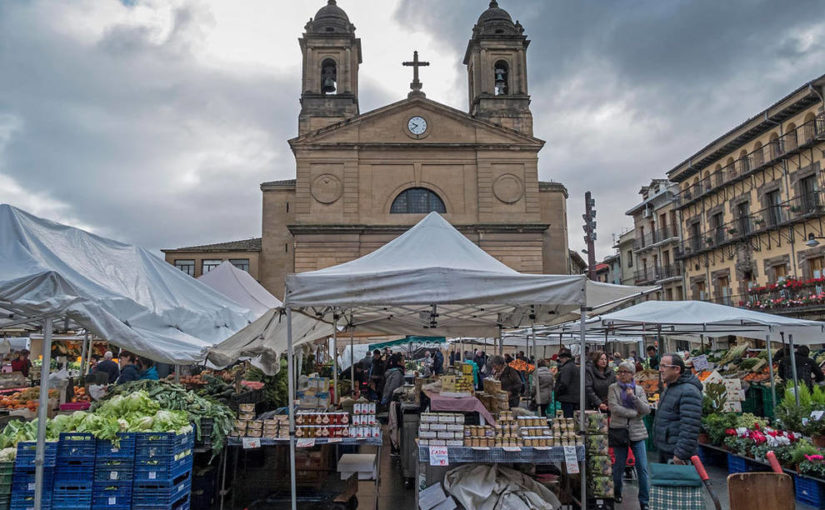
Me acabo de levantar, son las 10 de la mañana, es tarde. Mi madre entró en la habitación al grito de “noches alegres, mañanas tristes” mientras subía la persiana con vigor y el sol de agosto esprintaba para tomar posesión de cada recoveco de la habitación. “Buenos días, mama” trato de decir con cierta compostura vocal. “No te oí, ¿a qué hora has llegado?”. Respondo que fue pronto por la mañana, que tiene el periódico en la mesa. “¿Ya lo he visto” dice, “de quien es ese periódico?” Mientras bajo las escaleras, el olor del café sobre la mesa me devuelve a la realidad. Es un día sin grandes obligaciones. Tengo que ir al mercado de Estella pues es jueves. Mi madre me da la lista de la compra. “Los melocotones se los compras al de Alfaro, que los trae buenos, y no están pasados. Trae magdalenas de los de Lerín también”. Cojo el coche de mi padre a mi hermana pequeña y vamos camino a Estella. Este pueblo es la capital de la comarca, ser de Estella es ser de ciudad, añade un toque de sofisticación sin necesidad de hacer nada especial, el resto somos “de pueblo” y tenemos que trabajárnoslo más. Salimos de casa y encaramos la cuesta de Muru; desde aquí se ve el valle y la cuesta abajo que acaba en Estella. En realidad, esta en un agujero, pero eso me da igual lo que realmente me fastidia es que a partir de aquí no hay manera de sintonizar la FM y la música desaparece. Llegamos en 10 minutos, pero como día de “jueves” todo está atascado, así que tenemos que aparcar en lo alto de la ciudad por San Miguel y caminar un rato hasta la plaza. La plaza es un cuadrado perfecto recorrido por un soportal que cubre 3 de los lados. El cuarto lo ocupa la iglesia de San juan, que preside la plaza a la que da nombre. Tiene una dimensión gigantesca con respecto al resto de edificios. A la entrada de la plaza, los jueves se forman corros de hombres hablando mientras descansan sus manos en los bolsillos porque no saben qué hacer con ellas. Hablan de la cosecha, el tiempo y otras habladurías menos gallardas. Las mujeres hacen la compra, discuten el puesto en la lista de espera y conversan de todo, todas y todos.

Encuentro al de Alfaro, pido la vez y espero mi turno. A mi padre no le gusta comprar fruta manoseada en el mercado, así que miro a las que están delante de mí por si se les ocurre averiguar la consistencia de los melocotones con sus manos.

Ya tenemos la fruta, las pastas así que es hora de tomarse el pincho. Vamos a un bar donde la tortilla es “chupendelere”, vamos que está muy buena. Caramelizan la cebolla y eso le da un toque muy rico. Mi hermana se toma un kas de limón, es bastante acido no me explico por qué le gusta tanto. Yo me tomo un bíter kas que es más sofisticado y el color rojo es muy navarro.

Hechos los quehaceres mañaneros, y con el estómago lleno volvemos a casa. Hace un calor irredento desde el punto de la mañana. Tengo que repasar en que pueblos hay fiestas este próximo fin de semana. No bailo mucho… más bien nada, pero se me da bien la charla. Así que al menos entretengo ilusiones de llegar a algo con alguien. A las chicas de estos pueblos les parezco un tipo algo raro. Visto distinto, hablo dándome algo de importancia y trato de hacerme el majo, pero se me nota todo. Bueno, veremos que pasa este fin de semana.

Ahora mismo, me voy a la piscina a hacerme unos largos y descansar. La luz es nítida, la atmosfera está limpia. El campo está de amarillo viejo, ese amarillo quemado de agosto, cuando el calor lleva tiempo machacando la tierra y la cosecha ya se puso a buen recaudo el mes pasado.

Hay pochas para comer.

I do not have a Rolex

Executive summary: This is just a very short reflection… and I do not have a Rolex.

There is fascination for watches in some people, frequently among men. It is believed that it is the “jewelry” of men. Let me share some thoughts about that.

A friend of mine recently told me that an acquaintance of him had sold his Rolex, he did not want it anymore. A very successful businessman who travels on a regular basis from the US to Europe and Asia. In one of his trips, while in a high-end hotel, someone taking care of him was wearing a Rolex. He asked if it was a legit one, and … it was. He felt part of a crowd, a feeling unbearable to him.

That short story got me thinking… first I do not have a Rolex. I belong to that massive crowd who do not have one. Then I thought, what is it with watches? Are they marks of the breeds we belong to? Do we, human beings, so desperately need that feeling of uniqueness? Are we not contradicting ourselves? Those moments when we feel more real, more human come to us when we feel connected with other human beings, in a state of flow with them.

Furthermore, why do we use watches? What does a watch measure?  I think we talked about the measure of time as movement. Time only exists if there is some change from before to after, from potency to act. A watch, not even a Rolex, does not measure the before and after. A watch with its tick tock is alien to changes or meaning. A watch is a beautiful piece of metal that measures nothing of relevance.

Why do we “measure” what we cannot grasp or control? Time is out of boundaries for us, entropy is unidirectional and there is nothing we can do about it. The legend attributed to St Augustine recounts that he met a boy at the seaside who was running back and forth between the sea and the pool with a seashell of water, what are you doing asked St Augustine: “I’m emptying the sea into this pool!” to which St Augustine answered “Son, you can’t do that!”

In summary, we attempt to measure something we just cannot measure, with a machine that underlines our uniqueness. However, we are more human when our uniqueness disappears and connect at a deep level with other human beings.

I will drink something, I may understand it by the end of it (the bottle).

Note to self: Entropy is just a fancy word for decay, growing disorder, death. Next time do not be so pretentious with the new words you just learnt.

Passion for your job and other nonsensical mantras

I am tired of people saying, “you show real passion for your work” or “he/she does not seem to have passion for his/her job”. What is all this nonsense about “passion for your job”? and what does it have to do with work? Are we lobotomized? Yes, we are.

Hey… why are you so annoyed? Relax!

Smell the roses…blow the candles…smell the roses…blow the candles…twenty more times please! Ok, I am relaxed now.

Let me go to the dictionary first. Passion is defined as a “strong and barely controllable emotion”.

So… what is your point?  You will see…

If we start dissecting the elements of passion the first aspect that draws our attention is strength. This is something measurable, it suggests a somewhat linear characteristic of the concept at hand, as if we could have 7 pounds 8 ounces of strength or 51 feet of strength but never a yes/no answer for strength. There is an inherent concept of finitude or limitation, it is something measurable as it develops on a scale. The evaluation of strength is always relative to other parameters, a specific outcome or the gap between what is and what is expected. This concept is in opposition to the boundlessness of presence or absence.

The second element of the definition is “barely controllable”, this sounds like the Millennium Falcon at light speed chasing the Emperor and his death’s star. Something beyond our reasonable means to manage, something that puts us immediately at the mercy of the circumstances surrounding us.

The third element of the definition involves emotion. Defined as “a natural instinctive state of mind deriving from one’s circumstances, mood, or relationships with others”, this is a state of mind defined by the external elements of one’s surroundings both physical and spiritual. Emotion is defined by levers that lay beyond our control; you are just a byproduct of a specific combination of circumstances. You could argue that your mood is under your control, but that is not totally true if you believe in biological psychiatry and read the sign in 72nd Street and Broadway Av in the Upper West, New York “Depression is a flaw in chemistry not character”.

So, we define a person having passion for his or her work as something of value; and it so happens that passion is something limited in scope, difficult or impossible to manage and absolutely outside our control mechanisms. Why would anyone want to have such a combination of bad actors?

What does it mean to do a good job? What is the moral contract for a job? Is it different for a doctor a pilot or a mason?

The reason we should do a good job is because we have a moral commitment to ourselves. As Augustine says “we become what we love”, and it is through our commitment that we come to love something. That is what makes us all equals at work, whether a pilot a doctor or a janitor we all have to make the moral commitment to do our best, put the effort and talent to do our best. Once that commitment is made, the job is different for everyone but those are the less relevant details.

Does it mean we all do the job we love above any other thing on earth? Of course not, sometimes we will do a job to put food on the table and our love will be in a hobby for example. But our moral commitment to do our best will allow us to draw pride and happiness from a job well done, and then we can enjoy our other interests.

So, let us do away with passion for work, and bring back a moral commitment to work that will make us happy and energetic.


Reading list

Confessions by St Augustine, published almost 17 hundred years ago and still in print

The road to character by D Brooks, 2015